2011 Year in Review

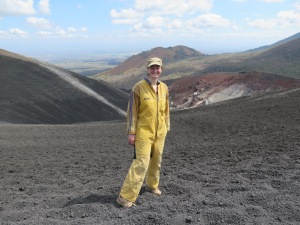
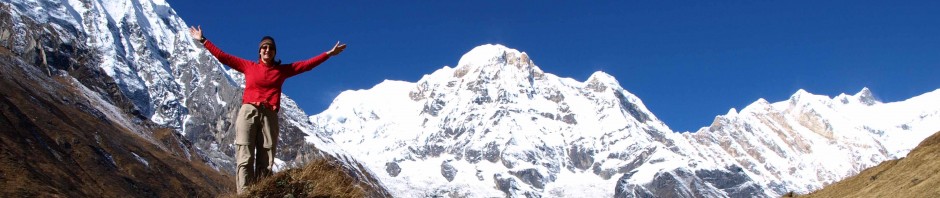
Annapurna Base Camp

Happy Holidays!

It’s that time of year again…time to wrap gifts, send wishes of happiness and wellness to friends and family, bake Christmas cookies, stuff stockings, sing carols, and enjoy the festivities of Christmas and the New Year.  It is also time to read a faithful account of Deborah’s 2011 Year in Review.

Midlife Crisis
In October 2010, I was laid off from my employer of thirteen years during the worst recession since the Great Depression. It was also very nearly, almost, practically the eve of my fortieth birthday. The circumstances were rife for a midlife crisis.

I decided to go traveling until the earlier of seven months, my money ran out, or I exhausted all blank passport pages.  And thus, a one-year saga of adventure, achievement, and change began.
Living the Dream
My travels took me through Central and Southeast Asia, New Zealand, and Africa over seven months.

Tibet is magical. The men and woman still wear traditional dress, including elaborate braids and hair ornaments indicating their geographical region. Their devotion to their religion and reverence for the Dalai Lama is impressive. I walked in their footsteps around the Barkhor kora (pilgrimage circuit) in Lhasa and watched them chant, prostrate, and spin prayer wheels continuously.

I traveled the barren and cold landscape from Lhasa, Tibet, to the Nepal border along the Friendship Highway, visiting monasteries and Everest Base Camp along the way.  Once in Kathmandu, Nepal, I enjoyed the comparative lavishness of my surroundings before embarking on an eleven-day trek to Annapurna Base Camp (ABC Trek).

Next, I spent nine weeks in Southeast Asia. I saw the splendid Royal Palace in Bangkok,

Surfer extraordinaire…

intricate temples in Laos, the fantastic Borobudur and Prambanan ruins of Java and the rice fields of Bali.  I pigged out on Thai food, learned to surf and scuba dive and hunted down the odoriferous Rafflesia flower. I climbed the Kelimutu Crater at dawn and saw Komodo dragons lounging within spitting distance on the Island of Rinku.  I endured bed bugs, tremendous humidity, and bad coffee.  It was worth it.

I landed in New Zealand for three weeks of R&R.  Stunning. Absolutely stunning.  Go!  Don’t delay!

I hiked the famous Tongariro Crossing, sailed across pristine waters, slapped on crampons for an all-day glacier walk, and drank lots of excellent New Zealand wine.

And finally, I spent three months traveling through Africa from Cape Town to Addis Ababa. I saw magnificent animals, the biggest skies of any continent, and the first sub-Saharan civilization of Africa.

I camped my way across the African continent.

I camped my way through most of the continent, falling asleep to hippos snorting, lions roaring, elephants making their way along a well-trodden path to the riverfront, and waves lapping against the shore. I had African plaits (braids) put in and rejoiced at the easy upkeep.  I learned that the hardest part of sandboarding is climbing the sand dune, that you can walk to within thirty feet of a giraffe before it’ll bolt, and that it can rain even in the Namibian desert.

I stared a mother gorilla in the eyes from ten feet away and watched the wildebeest migration with a 360-degree jeep panorama.  I saw spectacular sunrises in Namibia, met the Botswana bushmen, and survived long, uncomfortable bus journeys across the continent.  I still dream about the fantastic Ethiopian coffee.  One macchiato, please!

If I were independently wealthy, I’d probably still be out there – riding on a chicken bus, squeezed in between passengers, having a marvelous time.  Alas, I am not independently wealthy.

I returned home this summer and started a job this fall with a company that provides technology solutions to the financial industry.  I feel fortune to have landed a job during tough economic times.

And so, I come to the end of another Year in Review – A year of remarkable adventure, achievement, and change.  A year I got to live my dream.

Wishing you great happiness and a very Merry Christmas and New Year.

Deborah

Uganda

Potala Palace, Tibet

Namibia

Ethiopia

Namibia

Posted in Year in Review | 5 Comments

Home for the 4th of July

Greetings!

Six months ago I packed my rucksack, closed up my house, and headed out the door to travel the world.  My travels took me to Southeast Asia, New Zealand, and Africa. I anticipated seeing spectacular sights, meeting interesting people, and tackling new activities.  It delivered on all of these counts and so much more.  It was a trip of a lifetime.  The first trip of a lifetime.

There were ups and downs along the way, but mostly ups.  There were sights to dazzle your mind: The Royal Palace in Bangkok, the temples in Laos, and the Lalibela churches of Ethiopia.  The fantastic Borobudur and Prambanan sights in Indonesia and Ayuthaya and Sukhothai ruins in Thailand.  The rice fields in Bali. The brush-stroked mountain landscape of New Zealand and the rust-red sand dunes of Namibia.  Ah, Namibia.  The desolate, vast, and spectacular desert of Namibia.

The wildlife abounded: Dragons in Indonesia; Elephants in Botswana.  Giraffes, rhino, lions, leopards, and buffalo scattered throughout Southern and Eastern Africa.  Africa is home to the largest insects on the planet (I am sure). How ever did I survive them?  They were dreadful.

There was fantastic food, horrible food, and the worst coffee I’ve ever tasted.  I gleefully ate my way through Southeast Asia and tentatively explored the offerings of Africa.  Africa serves up daily portions of ugali, posho, injera, and my all-time least favorite, matoke. I coped. If I never see another mushy pile of maize or rubbery plantain dish, it will be too soon.

Ethiopia. What a surprise. Hidden behind the rock-throwing children, persistent touts, and money-grabbing religious men was good food and the best coffee in six months. The Ethiopian food is varied on its own, but the brief Italian occupation did wonders for the selection.  The coffee.  I miss the coffee already.  One macciato, please!

There were many cultural differences.  I mastered hello, yes, no, and thank you in every language.  I learned the names of the public transport (tuk tuks, matatus, boda bodas…) and agilely engaged in price negotiation.  I learned to politely request that the passport control squeeze a stamp onto a partially full page instead of starting a new one to save pages and I long ago memorized my passport number and date of issue.  Above all, I learned to run to the toilet on the rare occasion that an African bus stopped for a break.

Bed bugs.  I have become deeply, deeply paranoid about bed bugs.  I may be traumatized for life.  Do not mention them.  I beg of you.

I am confident in my ability to handle any situation: bus breakdowns, language barriers, and food attempts were all part of the experience.  As weeks turned into months, a crop of freckles appeared and became a permanent fixture on my face.  My feet became etched with tan and my toes gained a permanent film of dirt.  My sandals show the wear of fifteen countries.  I can pitch a tent before you have a chance to rest your rucksack.

I discarded two sun hats and have left behind me a trail of donated clothes. There is no disinfectant strong enough to cure what ails my day hikers. Everything I owned was tossed, boiled, or donated when I left.

I am a road-hardened traveler. I became confident in my travel expertise and even a little cocky…forty-five countries and counting.  But I was often humbled by others’ experiences as well.  There is always a traveler more adventurous, better traveled, or more versed in the local culture.  Two years on the road. Yemen. The Congo. The Sudan. There is always a traveler more intrepid.

I have seen poverty.  Children with distended bellies and open sores.  Cripples begging for a handout.  Adults living in rusted, train cargo carriers, mud huts, and shacks.  People who go without the basics of food, clothing, shelter, and healthcare.  I wish that every American could see what I have seen and experience what I have experienced.  It broadens one’s perspective and regrounds one in the basic humanities of providing food and healthcare to the poor and under-insured.

I met many marvelous people along the way – many of whom are included on this missive – who have enriched my life with new perspectives and experiences.  Thank you.

I return to the United States thrilled to have achieved a life aspiration, but I also return to the uncertainty of the job search. Wish me luck.

Keep scrolling…There are photos at the end!  Photos!  Mine!  You won’t want to miss them…

Trip Facts
The Basics
# of countries visited: 15 (Lifetime total: 45)
Countries Visited: Thailand, Laos, Malaysia, Indonesia, New Zealand, South Africa, Namibia, Botswana, Zambia, Zimbabwe, Malawi, Tanzania, Kenya, Uganda, Ethiopia
Miles Covered: A heck of a lot. Took a turn around the globe.
Budget: Came in under budget!

Transport
Longest Journey: 32 hours from Lilongwe, Malawi, to Dar es Salaam, Tanzania
# of Flights: 4 (intercontinental); 7(regional)
# of Bus Rides: 34 (excludes matatus, tuk tuks, boda bodas, pick-up trucks, hitchhiking, donkeys, and other alternative transportation)
# or Train Rides: 2
# of Ferries: 7

Accommodation
Most Paid: $35 (the night I upgraded to a better room in Kuala Lumpur after the first bed bug incident); Least Paid: $2
# of Nights in…
Dorm: 31
Tent: 50
On Transport: 7
Hotel/Hostel/Cabanas/Huts/Unknown:  The balance
# of Bed Bug Incidents: 4; # Fleas: 1; # Rats: 1; # Mice: many

Country Basics
Most Days in a Country: Thailand (26 days) ;  Least Days in a Country: Zimbabwe (3 days)
Most Number of Days in a Town: Consecutive: Cape Town, South Africa (6 days); Nonconsecutive: Kampala, Uganda (8 days – I kept turning up like a bad penny.)
Most Paid per Day (incl transp): New Zealand ($95/day); Least Expensive: Laos ($28/day)
Favorite Countries: New Zealand, Namibia
Most Beautiful Scenery: New Zealand, Namibia
Best Sunrise/Sunset: Namibia, Namibia, Namibia!
Best Animal Viewing: Tanzania
Best Temples: Laos
Most Diverse Attractions: Indonesia – there’s a little something for everyone
Best Food: Thailand (My god, can they cook!)
Best Outdoor Activities: New Zealand
Best Crafts: Laos
Best Music: Ethiopia (Jazz with a twist.  Amazing. Run out and buy some.)
Best Museum: Te Papa museum in Wellington, New Zealand
Country Most Likely to Revisit: New Zealand

Incidentals
Best Internet: Malaysia; Worst Internet: Zimbabwe
Best Toilets: New Zealand (pristine public toilets); Worst Toilets: Where do I begin?
Most Frequent Power Outages: Ethiopia followed closely by Uganda
Best Coffee: Ethiopia; Worst Coffee: Indonesia (with emphasis on the Island of Java)
Best Wine: South Africa (white); New Zealand (red); Worst Wine: Everywhere in Southeast Asia
Funniest Moment: Every time I attempted to take a bucket shower with two liters of water
Best Pre-departure Purchases: $80 for additional passport pages; Steripen to purify water
Best In-trip Purchases: Tent, Woolworth’s underwear
Best One-liner: After racing to get on a moving bus from a brief toilet break I asked a fellow traveler if he was worried about me making the bus.  He responded, “No, I saw you running as the bus rolled away.” Tricky business leaping onto a moving bus.
Near Death Experiences: Riding a boda boda (motorcycle hire) 17 km uphill on a dirt, winding path after dark to get to Bwindi Impenetrable Forest; Rafting the Nile

Favorite Moments: So many…
* Eating at the night markets in Southeast Asia
* Searching for the largest flower in the world in Malaysia
* Watching the sunset over Namibia’s vast desert
* Falling asleep to roaring lions in Etosha National Park, Namibia; To Hippos in Naivasha, Kenya: And to elephants in Chobe National Park, Botswana.
* Watching a lion track its prey in Etosha National Park
* 360 degree panorama of the wildebeest migration in Serengeti
* Watching elephants trod to the riverfront at night by my campsite in Chobe National Park in Botswana.
* Biking past giraffes in Hell’s Gate National Park in Kenya
* Making eye contact with a gorilla in Bwindi Impenetrable Forest in Uganda
* Learning to surf, sandboard, quadbike, glacier walk, gorilla track, scuba dive
* Whitewater rafting the Nile
* Canoeing the Zambezi River in Zimbabwe
* Standing up after nine hours of hair-braiding
* Kayaking Lake Malawi
* Hiking the Tongoriro Crossing in New Zealand; Hiking, generally, in New Zealand
* Drinking coffee in Ethiopia and listening to fantastic Ethiopian music
* Touring the Lalibela churches in Ethiopia
* Interacting with locals
* Meeting other travelers; Developing lifelong friendships

Worst Moments:
* Every time I had a run-in with bed bugs, fleas, or rats
* Losing three weeks of Indonesia photos to memory card corruption
* All African bus rides over six hours.  They all have iron-clad bladders.  Every last one of them.

Misses:
* Multi-day canoe trip down the Zambezi
* Volunteering in Africa (somehow, somewhere)
* Borneo
* Biking from Cairo to Cape Town

Best photo? You decide…
I’ve culled through all 4000 plus photos I took and you will be happy to learn that I’ve whittled it down to the critical few….It’s still a lot.  I tried really, really hard, though.

Flip quickly and you won’t hold the photo viewing against me for the rest of my life and yours.  Southeast Asia is skippable – if you must.  Southern and East Africa are solid, good photography.  You won’t want to miss them.  Suck it up and click the links.  Under no circumstances should you skip the New Zealand shots.  Big, big mistake.  You must give them their due.  I am just self-confident enough to think them stunning.

Photos!
Southeast Asia Photos
New Zealand Photos
Southern Africa Photos
East Africa Photos

I end my journey with a wealth of memories and experiences and just a tad poorer.

Signing off from the world, for now,

Deborah

Posted in 2011 6-month travels, USA | Leave a comment

Give Me a Pen!

Selam!

After seeing the amazing mountain gorillas in southern Uganda, I detoured to Jinja to whitewater raft the Nile. Considered one of the best rafting rivers in the world, it did not disappoint. It was a wild ride.

Next, I hopped on my first flight in Africa to Addis Ababa, Ethiopia, to tour the ruins of the oldest African civilizations. My Ethiopian travels took me to Bahir Dar, where the highlight of the island monastery tour was spotting a church mural of a man with a shotgun pointed at person hiding in a tree and a painting of St. Mary that had Mona Lisa eyes that followed you along the corridor. The Ghion Hotel of Bahir Dar also gets high marks for the most non-functioning items. How is it possible that not a single electrical outlet worked, every water source leaked, and every light bulb dangled?

I followed the well-trodden historical route to the ancient kingdoms of Gonder and Aksum followed by the impressive, rock-hewn churches of Lalibela.


Give Me a Pen!
Travel in under-developed countries is often exasperating, but Ethiopia is working hard to break the world record.

Gimme, Gimme, Gimme
As I traveled through Africa, the buzz about Ethiopia from other travelers was that the begging is horrible, the adults are persistent, and you get mobbed by children beggars who turn mean when you don’t give them anything. One man told me that cyclists in his bike group (they were biking from Cairo to Cape Town) were getting injured because children were throwing rocks at them and jamming sticks in their spokes. Another traveler said the children repeatedly threw rocks at their car as they drove through the countryside resulting in significant car damage.

Throughout Africa foreigners get a lot of attention, but the attention you get from locals in other countries pales in comparison to the frenetic mobbing in Ethiopia. Teenage boys loiter outside your hotel to sell you tourist trinkets, outdated world maps, and tours and children race to greet you with the popular refrains of “Give me a pen!” and “Gimme birr!” Their persistence is exhausting: They will follow you for miles in a long procession until you get so annoyed you beat a hasty retreat to the safety of the hotel compound (at which point they demand a tip for “guiding” you through the village).

I was snapping a landscape photo at an isolated, scenic overlook in the Yeha area of northern Ethiopia, when I heard “Give me a pen!” from across a vast canyon and humorously saw a child, tiny on the horizon, race towards us as though he could leap the distance across the canyon to get the prized pen.

In the Tigray region, children held rocks and mimicked throwing them, but it wasn’t until I was walking in the countryside outside Aksum that a girl actually threw one at me after I refused her demands for pens, birr, and candy. Next time I throw back.

A fellow tourist and I contracted with a tour guide in Lalibela and the other tourist informed the guide that his Number One Priority was to keep the children beggars away. The guide took his Number One Priority very seriously and we were not subjected to any begging until the guide left us – that is, the very moment the guide left us.

I have traveled the world and seen tremendous poverty, but I have never experienced begging this bad. It makes the begging in India seem like a non-event. Not all children beg and some are outright endearing, but the begging is so pervasive that you become suspicious of every child’s motive – I found myself bracing for the “Give me a pen! Gimme birr!” even as I held a child’s hand to walk down a path or asked her about school.

Greed in the Name of Religion
In the semi-desert area of northern Ethiopia lie the churches of Tigray. The churches are situated in a jutting mountain landscape and are interesting to explore because of the fantastic scenery, vertigo-inspiring hiking, and incredible vistas from the churches’ precarious perches high in the mountains.

The churches themselves are less interesting than the scenery, and regrettably, there’s an entire infrastructure of money-grabbing to go along with them. It generally starts the moment you stop the car with children begging for pens and birr and continues with teenage boys “guiding” you down the well-identified path to the monastery and asking for payment. If you’re really, really luck, you can share your walk with twelve kids, five teenage guides, and a couple of adult scouts. The procession gradually makes its way to the monastery at which point a boy will fetch the priest, an action for which he will expect a tip. The priest will request payment (which is often inflated and pocketed) and demand a further tip for the tour (which is generally includes unlocking the door, motioning us in, and sometimes a few unhelpful words in Amharic). This is all in addition to the outrageously high entrance fee.

The begging and tip, bonus, and doing-nothing requests, are so widespread that I began to count the number of times an Ethiopian answered a question without requesting payment. In fifteen days, the count is three.

Our first encounter with a priest was at the Petros & Paulos church where he demanded a tip for doing nothing more than unlocking the door and grew angry when we explained that opening a door did not warrant a tip in our books. We were practically chased down the rickety, wooden ladder to the base of the mountain.

The most extreme case of religious greed occurred at a mosque in Negash where a Muslim religious man demanded a tip, scoffed in Arabic at our offering, and called a fellow tourist (who spoke Arabic) a member of Al Qaeda and called me a daughter of a dog (the absolute worst slur).

And since I’m on a roll, I will further commentate that the churches of Tigray are not that great. They are neither as impressively carved as the Ellora caves in India nor has beautifully situated as Machu Picchu in Peru nor as massive and intricate as Angkor Wat in Cambodia, yet their fees are comparable.

Ethiopia has a major PR problem on their hands and if they want to continue to attract tourist dollars, they will need to resolve several issues. My consultation skills are available for hire. Payment is accepted in pens.

Trapped in Lalibela
I awoke in Lalibela, famous for its rock-hewn churches, to the news that the Dubbi volcano in Eritrea had erupted and ash cloud was causing flight cancellations in Ethiopia, including all internal flights as well as several international flights. This was grave news for me because I had a flight scheduled for the next day to Addis Ababa. (It also disappointed a lot of locals who were looking forward to seeing Hillary Clinton on a planned visit to Lalibela.)

I was trapped in Lalibela.

Nine of us contracted a mini-bus to drive us to Addis. Road trips are always eventful in Africa and ours included a flat tire, burnt out brakes (they had to put rocks under the back wheels to prevent it from rolling), a stop to purchase chat, and two drivers who got high on chat and drunk on rum before the most difficult mountain pass. A grueling seventeen hours later we rolled into Addis.  In one piece.

The Search Is Over
As you know I have been traveling for nearly six months, and at times, the hardships have been substantial. At the top of my list is bad coffee. But I have good news. My search for the perfect cup of coffee is finally over: Ethiopia is the country of good coffee. They even have a coffee ceremony to give the bean its due.

I can now come home, replete in the knowledge that I have found the perfect cup of coffee.

Other Critically Important Information
* It took me five months in left-sided driving countries to learn to look right, not left, before crossing the road. I mastered it. By a cruel twist of fate, they drive on the right side of the road in Ethiopia.
* Ethiopians stop at pedestrian crosswalks.
* I devoted an entire day to looking for dental floss in Addis.  There is no dental floss in Ethiopia.
* The brief Italian occupation did wonders for the food selection in Ethiopia and I’ve eaten some of the best Italian food as a break from injera.

Signing off from Ethiopia,

Deborah
P.S. I had another run-in with bed bugs in Wukro in the Tigray region.  I roused the housekeeper in the middle of the night who moved me to another room.  The second room had fleas.  So that was nice.  The next morning a fellow traveler found me trying to explain to the kitchen staff that I needed them to boil water to decontaminate my clothes.

Posted in 2011 6-month travels, Ethiopia | Tagged , , , , , , , , , , , | 3 Comments

Living the Dream

Hello!

Back on the backpacker trail, I traveled from Arusha, Tanzania, to Nairobi, Kenya.  I managed to not get mugged in Africa’s most dangerous city before heading to peaceful Naivasha where I biked by giraffes, kudu, and warthogs in Hell’s Gate National Park.  I continued to Uganda, where gorilla tracking and whitewater rafting were on my agenda.

Living the Dream
The Fat Woman
The coveted mountain gorilla permits are usually hard to come by last minute, but the combination of the recent political unrest in Kampala and the rainy season meant I was able to nab a permit easily.  I chose to visit the nineteen-member Habinyanja family located in Bwindi Impenetrable Forest in the southwest corner of Uganda near the Congo.  I was excited.  Seeing the gorillas in the wild was bound to be a highlight of my trip.

Getting to Bwindi is not easy. It is a long bus journey followed by either a special hire or a boda boda (motorcycle) ride for the remaining 17 km to the park.  I arrived at the Kampala bus station at 6 a.m. to catch the bus to Butogota and secured a seat close to the entrance.  The entrance seat was critical.  On the rare toilet break, I could quickly get out and in without having to run after a departing bus that never counts passengers before leaving. (Is it really that hard to ensure the only white person is on the bus?)

The bus was supposed to leave at 6:30 a.m., but as is frequently the case, the driver waits until it fills up before leaving.  We left at 8 a.m.

Bus seats are almost always too small on African buses, and as a result, it’s important to have a seatmate strategy for long distance bus rides.  My strategy was to try to encourage an elderly woman with no children to sit next to me.  Elderly women tend to be petite and considerate of space.  Despite having a plan, it can be tricky to make eye contact and convince them to sit next to you.  Africans prefer to sit next to other Africans.  As a result, the mzungu’s seat (foreigner’s seat) is often the last one to be filled.

On this particular occasion, I tried and failed to entice an elderly woman to be my seatmate.  I watched the bus fill up around me until my bench was the only one open.  A small man entered the bus and asked me if the seat was taken.  I was relieved.  The next best option to a petite elderly woman was a small, childless man.  He dumped a bag on the seat and disappeared outside.

I glanced at the bag and noticed in alarm that it was too feminine to belong to a man.  The man returned with a large woman and toddler in toe…and another bag.

Africans are generally smaller and thinner than Americans (We are the fattest country in the world), but this woman was definitely the exception to the rule.  She slid into the seat next to me, a toddler and gigantic bag on her lap.  We hadn’t even rolled out of the parking lot and I was already feeling pinned between the fat woman and the window.  The toddler and bag wound up partially on my lap.

The bus ride was estimated to be twelve hours (not counting the two-hour wait).  I tried to remain positive.

As we drove south the roads became increasingly rougher and undulating.  The large woman did nothing to brace herself and I felt the full force of her weight on the turns, pinning me to the window and crushing my ribs.  I’d gasp “more space – please” and she’d oblige for five minutes before encroaching once more.  She was also fidgety and every time she moved, I got a sharp elbow to the arm or ribs.  Her child kicked too.

After ten hours, the fat woman with the child disembarked and a petite teenage girl slide into the seat.  I sighed in relief.  My arms were sore and bruised from the impact, my disposition raw.

I tried to remind myself that I’m living a dream. The dream of traveling the world.

Mountain Gorillas
The next day I got up early to track the mountain gorillas.  I showed up wearing day hikers and carrying a camera, lunch, and water.  There were eight of us plus a ranger and two scouts who carried rifles and machetes.  Since the gorillas are always on the move, the scouts spend the night in the forest, monitoring the gorillas’ movements and location.

Bwindi is justly called the Impenetrable Forest: The park is mountainous and the jungle is dense.  For the first part of the trek, we skirted tea fields, but quickly moved into dense forest where we were told the gorillas were nearby.  We first spied the silverback, the big guy, but he was on the move, and we clumsily followed him through steep terrain, thick with vegetation. The scouts pulled out machetes and helped to clear the way as we followed him in hot pursuit.

It was hard going, but eventually the silverback slowed and stopped in a clearing where we encountered other family members.  A mother lumbering by with a baby on her back; Another mother eating leaves off a tree; A child enthusiastically climbing a vine; And an adult basking in the sun.  In total, we saw fourteen of the nineteen-member family.

We were told to keep a 7 m distance, which was problematic because the mothers would approach you, at which point you were instructed to remain still so they wouldn’t charge you.  One mother approached me.  She looked at me.  I looked at her.  Intelligence shone in her eyes. I smiled. And I knew.  She was taking my measure to ensure I wasn’t a threat. She acknowledged that I was safe by turning away to continue eating.

You are only allowed to spend an hour with the gorillas to prevent them becoming too habituated and we made our way back to the start reluctantly, our minds filled with images of these enchanting, compelling creatures.

Living the dream.

Another Bus Ride
There were three tourists from D.C. who I had gotten to know on the gorilla trek.  I learned they were heading back to Kampala the next day and asked them if I could hitch a ride to avoid another painful bus ride. I had previously joked about the horrible bus journey down and the bruises on my arms were unmistakable proof of my ordeal.

They were driving a luxurious, full size SUV with plenty of space for one person by American standards and at least three by African standards.  They hemmed and hawed and in the end avoided an outright, verbal refusal (although all of the non-verbal signs were aligned).

No ride.

The bus ride back to Kampala left from the neighboring village of Butogota at 4 a.m., which was too early of a start to stay in Bwindi. I packed up and headed to the matatu (public minibus) stop. After waiting two hours for the matatu to come (it broke down), I hopped a boda to Butogota and checked into a modest hotel directly across from the bus corner.  That night I poured a bucket shower and thought longingly of the normal shower I could have had if I had been able to stay at the campground one more night.  I ate overcooked fish and cold rice for dinner and cursed the DCers.

On the bus ride to Kampala, my consecutive seatmates were two men who were shorter than I, but still managed to take up more leg space.  A boney, ten-year old girl with a cold sat on my lap for thirty minutes until her three siblings called her back to their shared seat.  The four of them piled in.

Vendors ply the bus routes and we had no shortage of food vendors entering the bus to sell their wares.  About halfway through the journey, a salesman selling African herbal treatments entered.  He was a professional and his speech carried conviction.  He described each product in excruciating detail.  People listened and bought.

Initially his sales pitch was spoken entirely in Luganda, however, when he pulled out a jar of cream, he followed his native tongue with a description of the product in English.  It was a cream guaranteed to increase the size of your butt.  He looked straight at me, the only white person on the bus, and made sure I could read the label, “Butt Enlargement Cream”.  I politely declined with a shake of my head and he seemed genuinely pained that I didn’t buy it. I secretly wished he’d pull out of his magic, black sachet a potion that would decrease the size of my thighs, but it seemed unlikely in a culture that prizes wide hips, big butts, and lots of curves.

In the end, my flat, boney ass survived the bus ride.  It’s all about living the dream.

Important Message from the Author
If a scruffy backpacker (yet intelligent and charismatic conversationalist) asks you for a lift – and it will save her from a bucket shower, overcooked fish, and an excruciating bus ride – you should always say yes. It is written in the Backpacker’s Code of Ethics. Don’t be a stuffy DCer.

Other Critically Important Information
* Last Tuesday, I found a razor in the dregs of my rucksack and shaved.  I also scrubbed my toenails, but they still look dirty. On Wednesday I washed my daypack; It also still looks dirty. I long for a washing machine.
* I’ve sampled a significant amount of potato chips in Africa.  Simba chips, a South African brand, are the best.  I am partial to the Mexican Chili flavor.  They are better than Lays.
* Kenyans wear seat belts.
* Matatus and boda bodas (public transport) in Kampala charge more to go uphill than down.

Signing off from Uganda,

Deborah
(the flat-butted, white chick)

Posted in 2011 6-month travels, Uganda | Tagged , , , , , , , , | Leave a comment

The Great Migration

Jambo!

I’ve been on the move a lot.  After last writing to you from Zambia, I traveled through Malawi where I idled away a couple of days by Lake Malawi kayaking and catching up on reading.  The inactivity proved to be too much for me and I made my way to Dar es Salaam, Tanzania, in a long, painstaking bus journey (more on this later).  I then headed to the Muslim island of Zanzibar.

Bin and Gone*
I was on Zanzibar shortly after the news of Osama Bin Laden’s killing was announced.  Tanzanian Muslims tend to be moderate, but I still tried to lay low.  I was watching the evening news with the hostel owner one night when coverage of Bin Laden came on.  I kept my expression neutral, even when they recounted the number of lives lost during 9/11.  My Muslim hostel owner cast me a sympathetic look.  The BBC News headline was “Bin and Gone.”

On a previous night in Malawi, after viewing a news clip of Americans taking to the streets in wild celebration over Bin Laden’s death on a previous night in Malawi, a Christian Malawian asked me if I would like to join my fellow Americans in celebration.

I answered carefully.

“What he did was wrong,” I replied, “and he deserved to be punished.  But I do not believe that a human being’s death should be riotously celebrated.  Nor, I think, is the news clip representative of most Americans’ behavior during this time.”   At least, I hope not.

The Malawi coffee grower nodded his head in agreement.

The Bus Ride
I decided the best way to get to Tanzania from Malawi was to do it in one shot.  I was told the journey from Lilongwe, Malawi, to Dar es Salaam, Tanzania, would take twenty-seven hours and braced myself for an ordeal.

The Pastor.  At the beginning of long distance bus rides, a pastor enters the bus and reads from scripture.  It is generally a passionate, boisterous speech, and this bus ride was no exception.  People listen respectfully and resume their conversations without comment directly afterwards. For those of you worried about my religious soul (Mom), fear not.  I have had plenty of scripture read to me in Swahili (Chichewa, etc.).

On this particular bus, there was also a Jesus poster taped to the windshield above the driver.  Jesus had a sash covering one eye which made him look like a pirate.  When a gust of wind would blow through the bus, the poster would undulate, grossly distorting his one visible eye.  This kept me entertained for a good hour.

Ismael.  My seat mate was a Malawian named Ismael.  His command of English was excellent and he kept me entertained by showing me photos of his sweet Zimbabwean fiance and talking about his business dealings.

African Bladders. The bus driver always seemed to be in a tremendous hurry.  He stopped only once for a meal, and so briefly, I almost missed the bus when I chose to floss before getting back on the bus.  (Ismael made him wait.)  Similarly, he stopped for a toilet break every eight hours, which on bumpy roads, caused me great anxiety. I finally took matters into my own hands and twice demanded that he stop.  I think Africans have iron-clad bladders.  The infrequent stops didn’t even seem to bother the pregnant women.

Night Air.  In Malawi, we didn’t have any standing-aisle passengers, but once we got into Tanzania, passengers started rolling in and parking themselves in the aisles. They seemed to congregate near me, creating an air barrier between me and the open windows in the front of the bus.  I asked Ismael, who was in the window seat, to open the window and he looked horrified.  “No, no, no.  The night air is bad for your health,” he responded.

I was dumbstruck.  Night air is bad for you?  I tried hard to hide my amusement and succeeded only because most of the interior bus lights were broken. I vaguely recalled that Europeans and Americans thought night air was bad for you in the eighteenth century, but that this superstition was eventually discredited by science.  One of the main reasons night air was believed to be bad was because they thought night air, not mosquitoes, carried malaria.

I suffered the long night hours until dawn when we could open the window again.**

Thirty-Two Hours.  The bus arrived in Dar es Salaam thirty-two hours after it departed Lilongwe, which was five hours more than estimated.  When I arrived at my hotel, there was no running water.

The Great Migration
After Zanzibar, I headed to Arusha, the safari capital of Tanzania, and after lengthy price negotiations, settled on a safari to Serengeti, Ngorongoro Crater, and Lake Manyara.  I was intent on seeing the Big Five: Elephants, lions, buffaloes, leopards, and rhinoceros.

After touring Lake Manyara, where a giraffe poked his head in the land cruiser’s skylight and we had to break hard to avoid an elephant crossing the road, we headed to Serengeti.

At the park entrance, we heard rumors that the wildebeest migration was nearby, but our guide told us not to get our hopes up because the park was large and we might not see them.  I was surprised to learn that the wildebeest migration was already occurring, but it had apparently been a dry season and the wildebeest were making their way north earlier than usual in search of food. We kept our fingers crossed.

The wildebeest migration is when millions of wildebeest (and zebras) travel from Tanzania to Kenya in search of better grazing.  It happens every year and begins in late May or June, ending in Kenya’s Masai Mara park mid-summer. It is the largest mammal migration in the world and visitors try to time their visit to East Africa specifically to see it.

We had been traveling through the Serengeti savannah for two hours, spotting an occasional antelope, giraffe, and warthog, when we curved passed a large rock outcropping.  Our guide said, “There. Wildebeest.”

I looked hard, but all I could see were small bushes dotting the landscape.  “Where?”

“There.  Right in front of you.”  And then came the dawning realization that the tiny bushes on the horizon were wildebeest and zebras.  As far as the eye could see.

As we approached, our excitement mounted.  Wildebeest!  Zebras! Millions of them!

The wildebeest and zebras were not used to vehicles and they parted and scattered as we drove through the herd, only to regroup and surround our land cruiser when we’d turn off the engine.  It was an up-close, 360 degree panorama. We could smell their odor, hear them grunt, taste the dust they kicked up, and feel the thud of their trot as they moved past our vehicle.

In subsequent days, we saw a leopard in a tree with a dik dik kill, lions eating a zebra, hippos entering a pond at dawn, and buffalo so close to my tent that I commandeered the cook to help shoo them away, but nothing compared to the sensory overload of the wildebeest migration.

Signing off from Tanzania,

Deborah
*BBC News used the headline phrase “Bin and Gone” when Bin Laden’s death was first announced.

**Although I doubt all Malawians believe that the night air is bad, I have since learned that Ethiopians will not open a bus window at any time of day because the air is believed to be bad.  I will look forward to my future, stuffy bus journeys in Ethiopia.

Posted in 2011 6-month travels, Tanzania | Tagged , , , , , , , , , | 1 Comment

Road Warrior Dreads

Hello,

I am enjoying a spurt of good Internet access and thought I’d post another missive before I go underground again. I left Namibia behind (regretfully) and traveled through Botswana where I bush camped in the Okavango Delta and saw my first elephant and hippo. Importantly, I also learned to pole a mokoro, dug-out canoe, and can keep pace with the locals.

Next, I went to Chobe National Park where I took a boat cruise so jam-packed with wildlife I was sure the animals had been chained to the shoreline for the my sight-seeing benefit: I saw a herd of elephants taking a playful mud bath by the river’s edge and mother and baby hippos getting out of the water. At night, the campground’s resident crocodile came out for a visit at Campsite No. 10 and elephants followed a well-trodden path to the river along the security fence. Elephants make one heck of a racket and I blame them entirely for a poor night’s sleep.

I jumped the border into Zambia to visit Victoria Falls. It was flowing so furiously I got soaked getting to the lookout point and could barely make out the waterfall through the white-out conditions. My stay near Victoria Falls coincided with Easter holiday and I wound up grounded for a few extra days, but was able to cross into Zimbabwe for three days to see the falls from the other side*. I also squeezed in a day of canoeing down the Zambezi, but only managed to traverse 30 kilometers of its 2693 kilometer length. Alas, I may need to return to canoe it properly.

Road Warrior Dreads
I arrived in Africa with the mindset of getting African-style braids. I had always wanted to try the look and it seemed like a now or never activity. I also justified my decision because upkeep would be easier and less expensive, thus making it a sound economic decision.

I arrived promptly at 8 a.m. and introduced myself to Shera, the hair specialist. She gave my hair a once over and motioned me to follow her. We went to the open market that sold everything from auto parts to kitchen utensils and weaved our way through the labyrinth stalls until we found the hair vendor. Once there, she began systematically pulling packages of plastic hair off the hooks and comparing it to my hair. She consulted the vendor in Tonga, selected another packet of hair, nodded her agreement, and asked me to pay the vendor 50,000 kwacha. I thought the color was too blonde to be a good match for my hair, but she insisted. I plunked down the money and decided if it was a disaster, I would simply undo it the next day.

Next, we headed to a household goods stall that sold us a candle and matches. I paid 1000 kwacha and we returned to the hostel to get started.

Shera wasted no time getting down to business.

“What kind of hair you want?” she inquired.

“Plaits as small as you can make them and finish in a day.” Africans call braids, “plaits.”

She unceremoniously pushed me down on a cushion and started weaving the plastic hair extension into my hair. I was still shifting to get comfortable in my seat when she showed me the first braid.

“Is this small good? It will take maybe six hours.” I peered at the braid, noted that it was about 2 mm in width, and nodded my agreement.

She got started. Her hands were quick and nimble and she worked with great concentration to weave the plastic hair extensions into my existing hair, giving the hairdo more body and length.

My concern about the extension color was quickly diffused when several travelers passed by the hostel lobby and remarked on how wonderfully it blended in. She worked without a break (except for the ones I insisted on taking) for the next eight hours until every last piece of hair had been worked into a 2 mm braid. As the grand finale, she lit the candle and melted the end of the braids until every braid (approximately 100) was sealed. The entire process had taken nearly nine hours.

I looked in the mirror at the final product.  A new look. My road warrior dreads.

My exuberance at its completion knew no boundaries. My butt was sore and my legs were stiff from inactivity. I decided to stretch my legs by taking a stroll through the nearby curio market. The usual entourage of vendors approached me, but to my surprise, the female vendors asked questions about my hair and praised the quality of the work instead of touting the local crafts. They all agreed Shera had done an excellent job and that the price was fair. I was pleased by the attention and the praise. Best of all, my new hairdo had the unexpected benefit of serving as my introduction to conversations with the local women and the curio market set the stage for my gradual local acceptance.

That night, I met a few travelers for dinner and surprised them with my new look. An Irishman, who has beautiful blonde dreadlocks, took one look at me and asked with a smile, “How the hell are you going to get a job in Corporate America looking like that?”

My answer? We’ll see.

I’ve lived with the braids for two weeks now. I buried my comb in the bottom of my rucksack and rejoice at the infrequency of washing my hair. But the real benefit is that every where I go local women give me a knowing smile or engage me in conversation.

The Quest for the Perfect Tent
Two weeks into my Africa experience, I decided that camping was the best way to experience Africa: It would save me 50% on accommodation, be quieter than the dorms, and reduce my potential exposure to bed bugs which still haunt my sleep two months after my harrowing KL experience.

I set out to buy a backpacking tent, and thus, a four-country saga of tent shopping ensued.

In Africa, you can not simply waltz into REI, point, and purchase. It doesn’t work that way. You need information and patience. I made it a policy to identify the local safari guide, ask about camping supplies, and then track down the only store in a 200 km radius. My query was generally met with skepticism that a light-weight tent, appropriate for backpacking, existed. However, they gamely advised me on the most likely vendor and pointed me on my way. I repeated my query in towns across Namibia, Botswana, and Zambia, burning precious time on my quest for the perfect tent. I took a short break from my hunt in Zimbabwe, a country that struggles to keep its grocery store shelves stocked, but resumed my search once I was back in Zambia.

In each country I’d strike out. I tried not to get discouraged. Yes, they had tents. They were ungodly heavy.

In Lusaka, Zambia, I finally broke down and purchased an imperfect tent. It was a local brand and weighed in at 2.5 kilos. But, I had a tent. I next turned my attention to finding a sleeping pad. The stores that sell tents do not sell sleeping pads. It is baffling. I posed my question to my expat hostel owner who informed me that he had one in storage I could buy for $5. Another traveler had left it behind. I pounced on the offer, and thus, the four-country search for a tent and sleeping pad was finally concluded.

I spent several hours assessing the best way to strap my heavy tent and oversized sleeping pad to my pack. My pack is now heavy and clumsy. I will be shocked if I get out of Africa without major back problems.

Other Critically Important Information
* People in the know refer to Namibia, Zambia, and Zimbabwe as “Nam,” “Zam,” and “Zim.” Now you’re in the know too.
* My short stint in Zimbabwe did not give me time to spot Mugabe. Word from a Zimbabwean is that he is really in his 90s, not 87, as he claims.
* Five African children will pile into one available bus seat. You will wind up holding a baby. The baby will always have a wet diaper.
* I am running low on passport pages. I’ve taken to politely asking the immigration officer to squeeze the entry/exit stamp on a mostly full page.
* In Chobe National Park, I met a group of cyclists biking the entire length of Africa, Cairo to Cape Town. I may need to add this to my Refrigerator Goals. It is a worthy goal for the next time I get laid off.
* In Lusaka, I shared a six-bed, mixed dorm with five men. None of them snored.

Signing off from Zambia,

Deborah

*Victoria Falls is one of the falls on the Zambezi River, which is the boundary between Zimbabwe and Zambia.

Posted in 2011 6-month travels, Zambia | Tagged , , , , , , | 1 Comment

The Verdant Desert

Hi!
A few of you have been nice enough to ask for a blog update.  I know, I know.  I’m behind. But Africa is amazing, big, and lacking in readily available internet access.  Since I last wrote, I’ve traveled from Cape Town, South Africa, along the western coast and through Namibia.  I hadn’t traveled more than 150 miles in Namibia before I saw giraffes standing tall, elegant, and free in a field next to the highway. Zebras, springbok, and wildebeest came close on their heels.
My journey took me to Fish River Canyon which is a miniature Grand Canyon without the red rock hues and to Sossusvlei where I hiked up a sand dune to watch the sun rise over picture-perfect, rust-red sand dunes.  I then landed in Swakopund for a couple of days of adventure sport and continued to Etosha National Park where I saw a lion give chase to zebras and springbok and black-backed jackals devouring a downed zebra with vultures waiting their turn.  (Geography-challenged friends should please get out a map.)

The Verdant Desert
Namibia is home to the oldest desert in the world, the Namib Desert.  It is a hyper-arid gravel plain and dune desert and its vastness extends the entire coastline of the country.  Namibia gets 300 days of sunshine per year and receives a low annual rainfall amount of 50 mm/year.  The country is famous for its rust-red sand dunes and endless, empty lands.

Northern Namibia is currently experiencing the worst floods in fifty years.  In February, 65 people were killed by the floods and an additional 60,000 people were displaced.  The number of people impacted by the floods exceeds 220,000.  Many Namibians do not know how to swim, and as a result, high waters are particularly treacherous.  The Kuisib River, which is depicted on most maps as drying out before the ocean, is now flowing to the Atlantic.  It is the first time it has reached the Atlantic since 1963.  Even the landscape in southern Namibia is impacted by the floods with the result that arid deserts have turned prairie and animals have expanded their grazing areas to locations not previously inhabitable.

I arrived in the adrenaline capital of Swakopund intent on some fun.  I took a turn quadbiking on enormous sand dunes and had a blast.  (This announcement may shock some of you who know my preference for non-motorized recreation vehicles, NMRVs).  I next tried sandboarding which is like snowboarding without the snow.

I climbed the sand dune to the top which was an unexpected cardiovascular workout and significantly dampened my enthusiasm for the sport.  (I cursed my way up the hill seven more times.) The instructor gave the group brief instruction on waxing, standing, and navigating, and then selected me to go first.  I got into position, peered down the steep decline, and stalled.  It began to rain in a coastal area that receives an average rainfall of zero mm/year.   A raindrop landed on my nose, rolled off, and plopped onto the arid sand of the dune.

The instructor said it was the first time he’d seen rain on the dunes in eight years of instruction and exclaimed over our good fortune in getting such favorable weather for our class.

Noticing my hesitation, he gave me a nudge. The action took me off guard and I careered down the hill, spilled spectacularly a quarter of the way down and continued to fall down the rest of the dune in a combination of uncontrolled summersaults and backslides.  The board nailed my thigh and the football-sized bruise took two days to develop its full, glorious color.

After four more tries I concluded that I did not have an affinity for the sport and grabbed a lie-down sandboard.  I clocked 74 kph on my last run and was rewarded with a mouthful of sand at the finish line.

I can now add sandboarding to my list of accomplishments.

Other Critically Important Information
* Campground restrooms are called “ablutions blocks” and pit toilets are called “long-drops”.
* Africa has excellent quality jerky.  It is called “biltong” and is available in great quantities and varieties.
* It is more expensive to do laundry in Africa than New Zealand.  I have become an expert hand-washer.
* I baked a loaf of bread on a wood-burning fire, thus fulfilling a Refrigerator goal**
* I have seen the following animals so far: whale (jumped out of the water), giraffe (just hanging out in an open field), blue wildebeest, zebras, lions, black-backed jackals, vultures, springbok,blackfaced impala, oryx, steenbok, kudu, red hartebeest , violet-breasted roller, ostrich, warthogs, black rhinoceros (rare), chameleon lizard, secretary bird, yellow mongoose, little bee-aster bird, cape buffalo, and hippos.  To my nieces and nephews: Please brush up on your animal identification.  There will be a slide show and quiz when I return.
* Hippos look just like they are depicted in cartoons.

Signing off from Namibia,

Deborah
**I affectionately call my list of life goals, “refrigerator goals”: They are conveniently posted on my refrigerator so I don’t lose focus.

Posted in 2011 6-month travels, Namibia | Tagged , , , , , | Leave a comment